
How to book a group ski trip without everyone falling out
A practical guide to planning a group ski trip, from agreeing expectations and budgets to choosing a resort, accommodation and shared spending rules.
We've organised at least one friend-group ski trip a year since 2019, with a gap while Covid shut the Alps. The trips have ranged from a weekend blast in Chamonix to a full Monday to Friday in Courchevel, and the group has changed shape every time.
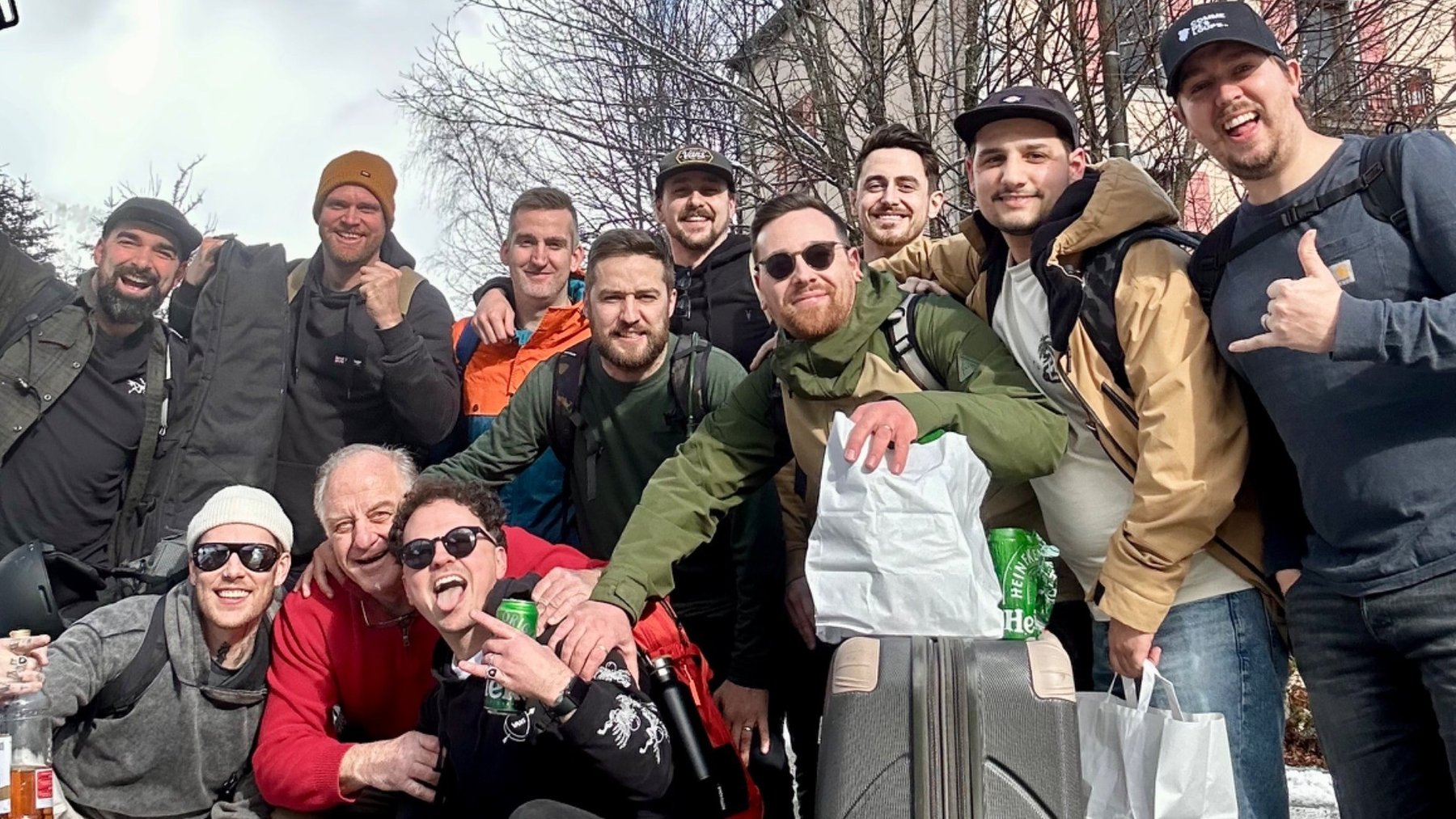
The biggest improvement came when we started agreeing what everyone expected from the holiday before anyone booked. Being part of a group shouldn't mean handing ownership of your holiday to everyone else, and our best trips have been the ones where everybody understood that from the start.
Work out why each person is going
Before you look at a single resort, ask everyone what they want from the week. Some people are there to ski as much as their legs allow. Others want a lesson a day and a gentle blue to practise on. Some are there for lunch and après and would be happy with two days on snow.
Get a rough answer from each person on the following:
- Ability and confidence on skis or a board
- How much the skiing itself matters
- Appetite for après and nightlife
- Interest in lessons and progression
- Budget ceiling
- Expectations for the accommodation
- Non-ski activities
- Whether they'd rather pay for convenience or save money
The aim is to understand what the majority cares about and whether anyone has a genuine non-negotiable, such as a bed of their own or a lift within walking distance.
Decide what "group" means before anyone pays
Most ski trips are planned to run in one of two ways: either the group skis, eats and socialises together for most of the day, or people travel and stay together but split up according to ability or energy, regrouping when it suits them. Both can make for a successful trip. Problems usually start when half the group has signed up for one version and half for the other.
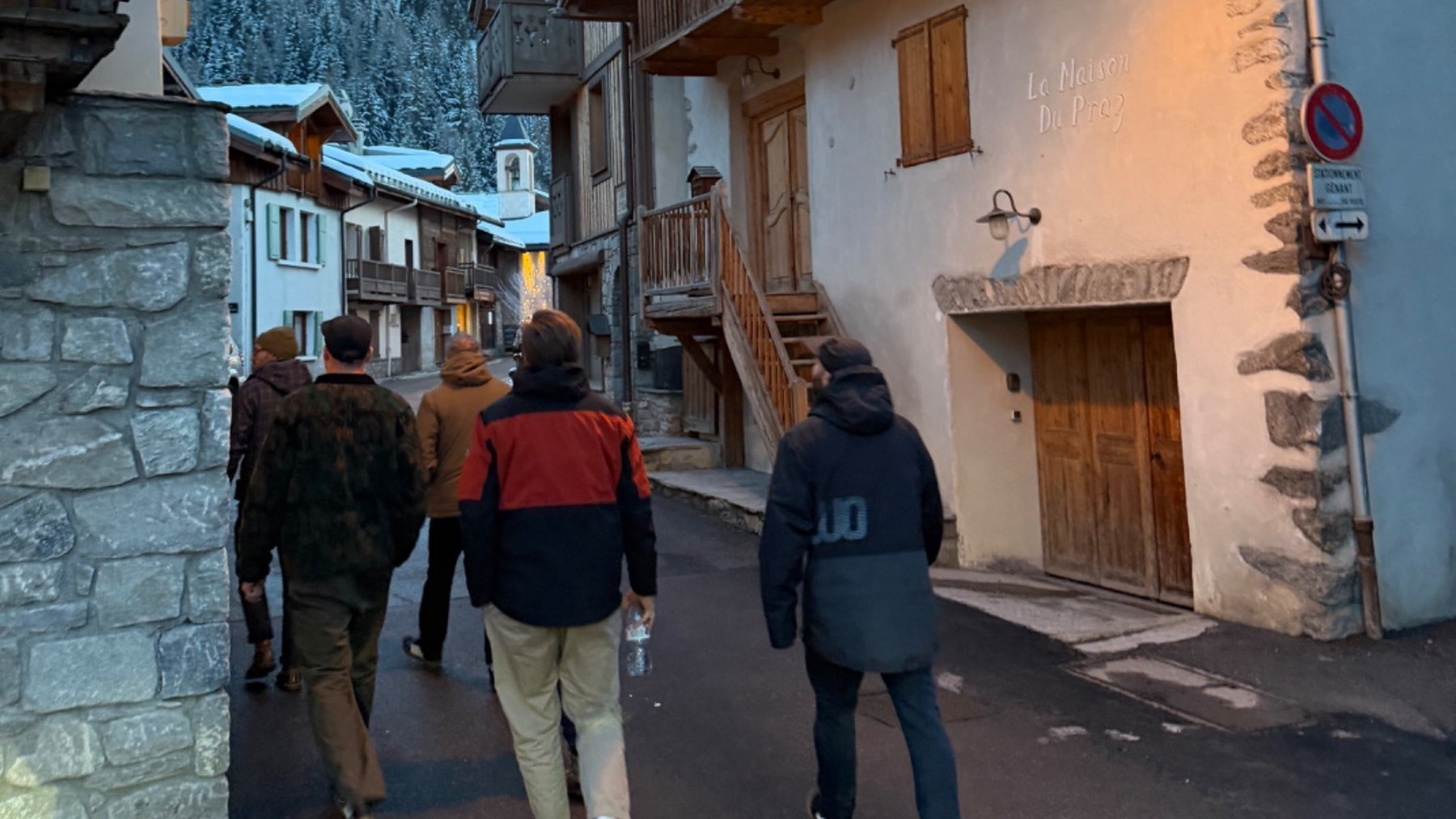
Our trips run on the second model, so stronger skiers can disappear for the day and cover as many kilometres as they like, while someone else spends the morning practising on a green run. Anyone who wants to book a private lesson or stay at après from 4pm until 1am is free to do so, as long as they accept the consequences the next day.
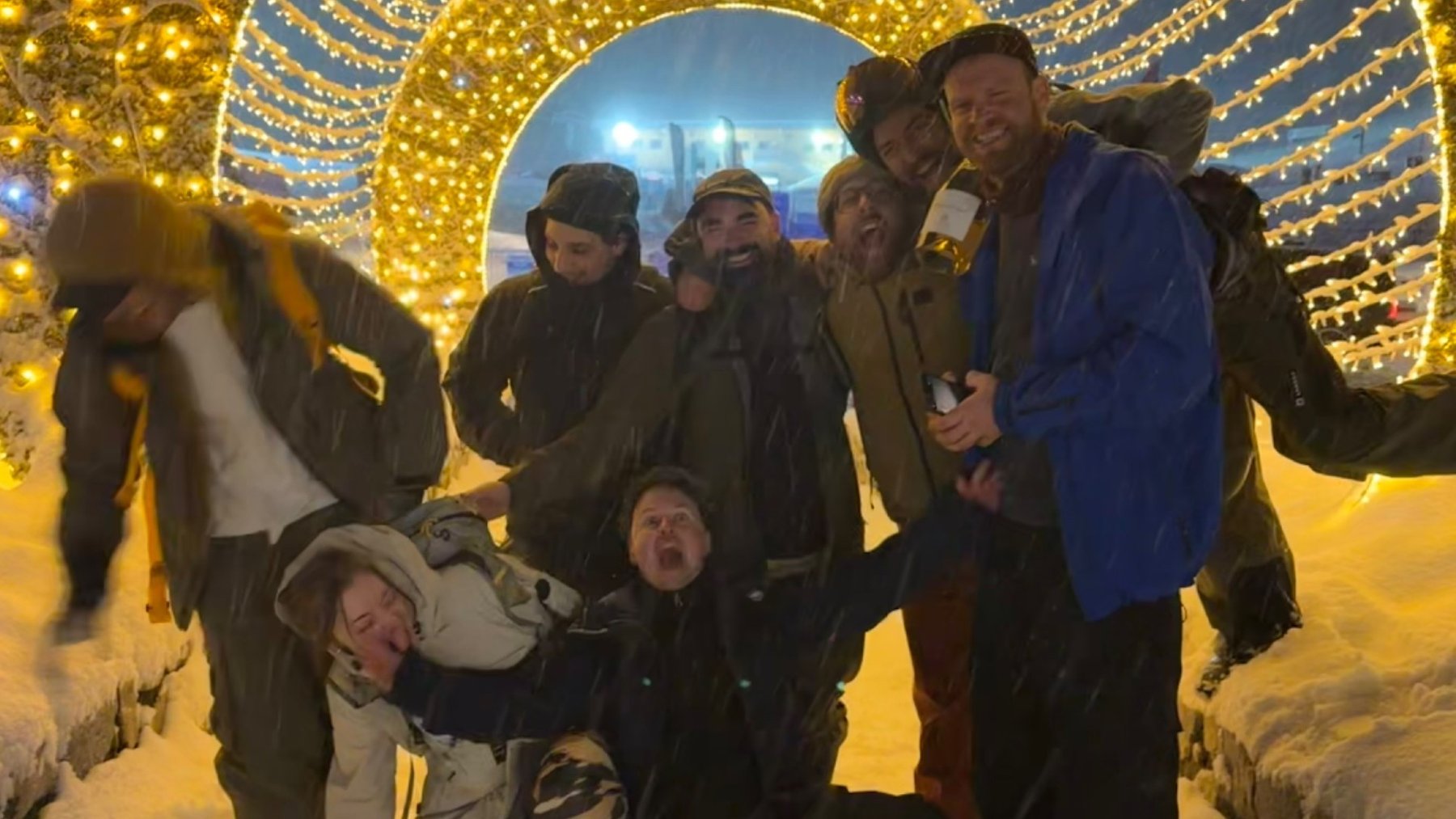
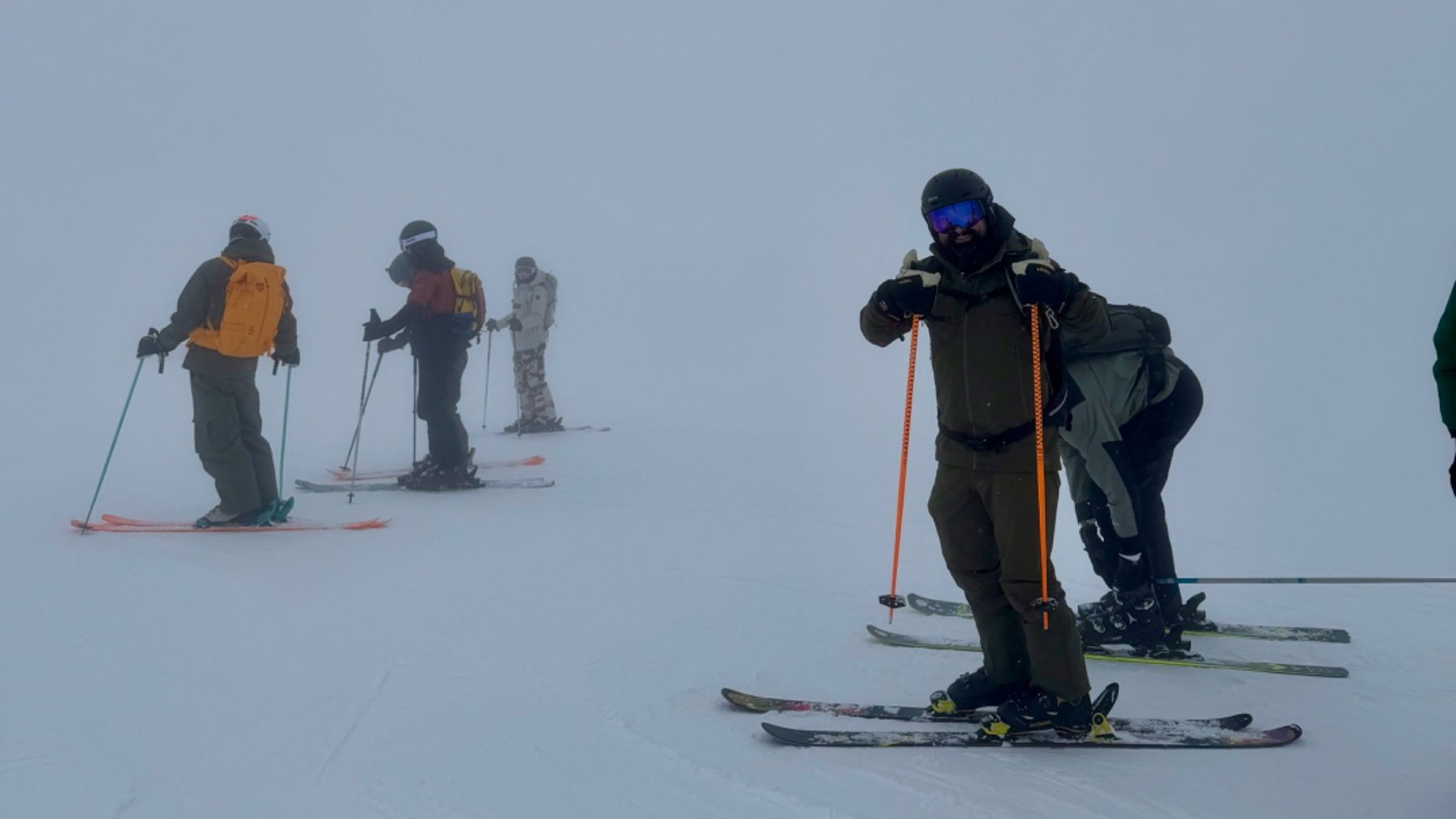
We're good enough friends to spend a week in each other's pockets, and also to go a couple of days with little more than a hello at breakfast. That only works because nobody arrives expecting constant company. On our Courchevel trip the group ranged from confident skiers to people on their first trips, plus a few snowboarders for good measure. Smaller groups formed during the day, the faster skiers headed across the Three Valleys, and we met for coffee or a drink when it suited.
Ask what people actually ski
"Intermediate" covers everyone from a nervous blue-run skier to someone comfortable on steep reds in flat light. Rather than asking people to choose a label, find out what terrain they're happy on now and what they'd like to be able to do by the end of the trip.
The Marmot Basin ability guide is a useful reference (but worth understanding it is based on North American terrain labels) because it describes behaviour rather than labels: a novice can stop and turn to avoid obstacles on green terrain, an intermediate is usually comfortable on groomed blues and wants to progress towards easy blacks, an advanced skier is attempting blacks and wants more control or efficiency.
The honest answers will help you plan the holiday more than a Google search for ‘best ski resort for a group holiday’ - resort choice, lift passes, lessons and who naturally ends up skiing together will all be impacted by those answers. Nobody should be pushed onto terrain beyond them to keep the group intact, and stronger skiers shouldn't be expected to compromise every single day - people can ski together when they choose to, without making it the default.
Show the full cost before anyone pays
Flights, transfers and accommodation might be the headline costs, but they're only the start of the bill. Before asking anyone to commit, give them a realistic idea of the total, including:
- Flights and baggage
- Transfers
- Accommodation
- Lift pass
- Ski or board hire
- Lessons
- Travel insurance with winter-sports cover
- Food, drinks and local transport
Resort choice moves the daily total a long way. Iglu Ski puts France, Austria and Switzerland at the expensive end for lunch and drinks, with Italy, Bulgaria and Andorra cheaper, while pointing out that every resort has budget options. Our Courchevel trip came to £348 a head for Luton to Geneva flights, private transfers and four nights, and we kept it there by staying in Le Praz rather than 1850. The lift passes, food and drinks on top were where the real spending happened.
Budgets within a group don't need to match, either. In Courchevel, the stronger skiers bought the full Three Valleys pass while others chose more limited local passes each day, and you can apply the same thinking to accommodation by choosing a hotel with standard and deluxe rooms, or two properties in the same village.
Choose a resort that fits this group
Only pick a destination once you know the group's abilities, budgets and priorities, then assess each option on its beginner areas, whether there's enough terrain to keep the faster skiers busy, lift-pass choices, easy meeting points, après and restaurants. Also consider whether everyone can get around independently on resort buses, rather than relying on the whole group moving together.
Courchevel worked for us because the long blues above the village kept the less experienced group happy while the rest of us had 600km of linked skiing in Les 3 Vallées - the option for all to buy a pass that suited, not wasting money on ski areas they wouldn’t touch, was a big benefit. There was still the option for easy regroups for lunch or drinks, but the good Apres spots were a little more challenging for all to meet.
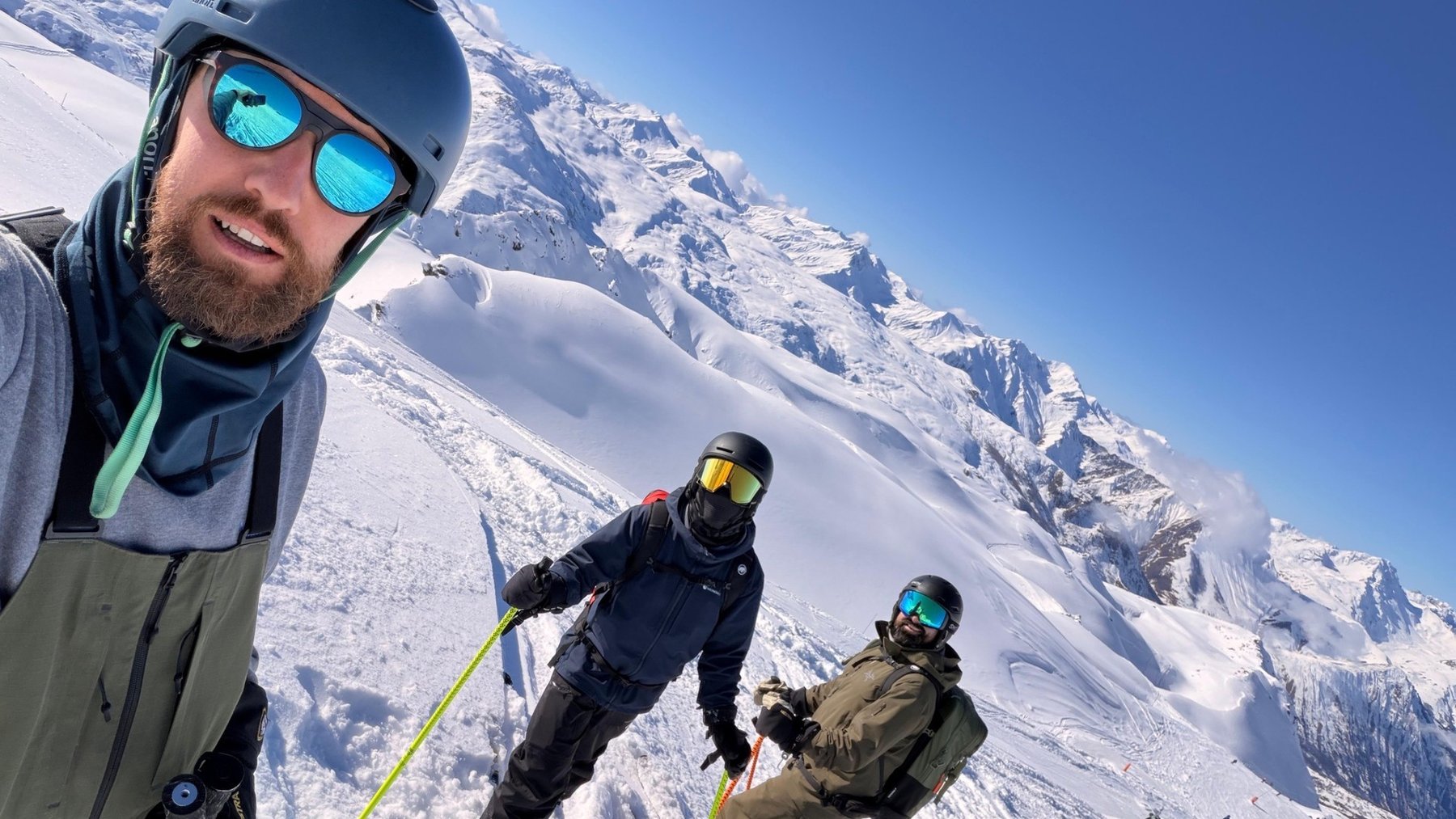
Chamonix suits a group that skews advanced, we learnt this on a trip where the beginners struggled to find the balance of wanting to move beyond a bunny slope but not end up on a quite challenging blue. Its sectors are spread along the valley rather than forming one continuously lift-linked area, so a mixed group has to choose an area each morning and travel to it by bus; it's a poor pick if the group plans to split and regroup for lunch. The village location is a great natural regroup for end of the day and makes meeting for the evening feel more natural.

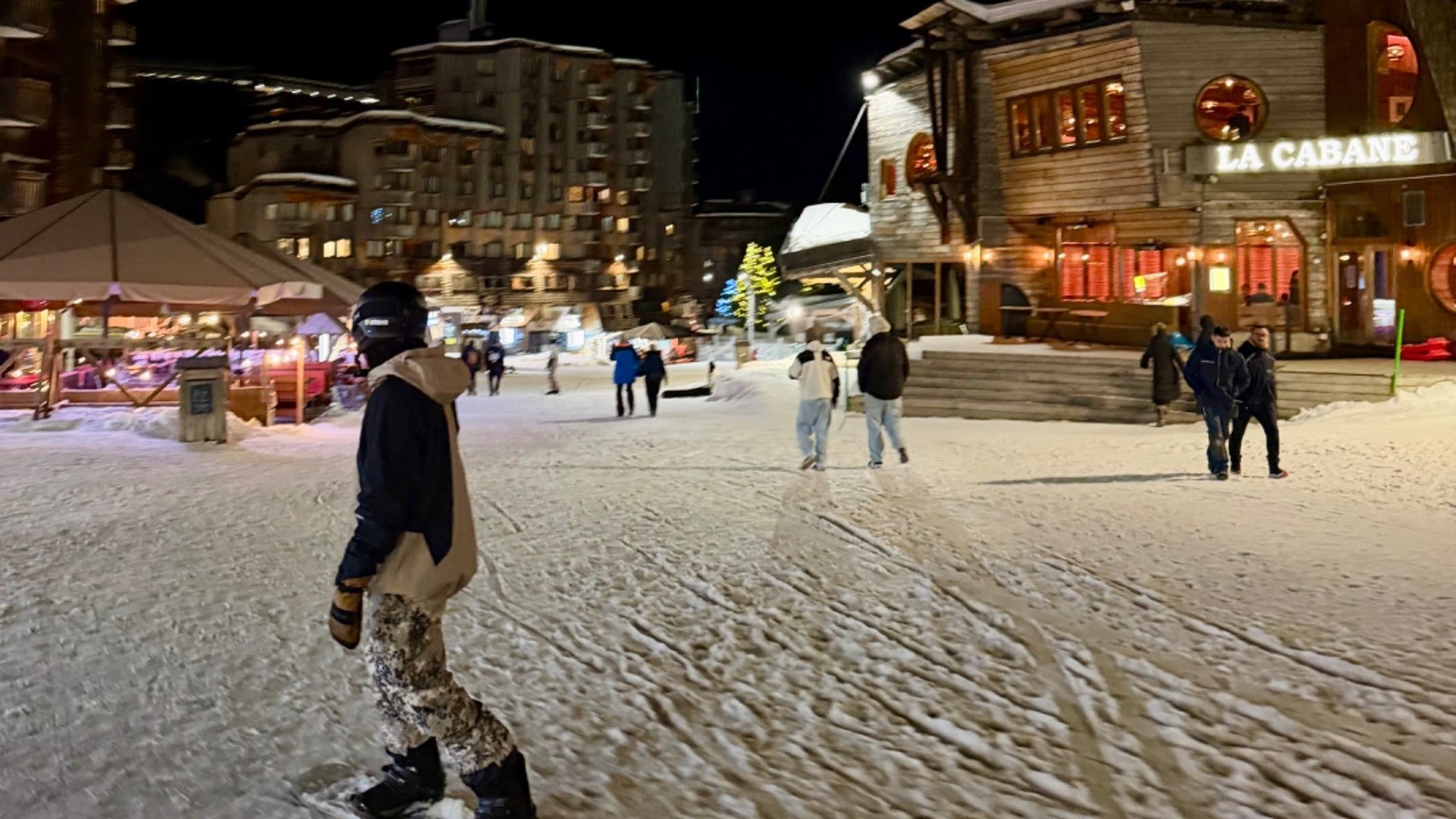
Avoriaz is a strong option for a mixed group because its plateau gives everyone an obvious place to regroup. Skiers can split up according to ability or ambition, with stronger skiers heading deeper into the Portes du Soleil, then meet again for coffee, lunch or après without anyone having to negotiate overly difficult terrain just to get there.
The accommodation selection can be a bit more tricky for large groups; with it being an on mountain resort rather than village level, there isn’t the scale of options to match places like Chamonix, but on balance it’s easy to recommend Avoriaz as a good choice.
Pick accommodation people can come and go from
Don't compare properties on price per head alone. Check the walk to the lift, the distance to bars, the last bus home, how many bathrooms there are (seriously, double-check this) and whether the beds are real or fold out of a sofa. Ski storage, a drying room and a nearby supermarket might feel like minor details when you're booking, but they matter much more by day four.
If everyone is paying the same, look hard at the rooms. A big double with a balcony and a bunk in a box room should not cost the same. Iglu Ski says chalets tend to top out at around 14 or 15 people, so larger groups may need two properties, a hotel or one of the less common high-capacity chalets. Using multiple properties or room categories can also make unequal budgets easier to handle.
For a group running independently, the accommodation needs to let people leave and return without coordinating with everyone else - a catered chalet with a fixed dinner time can work against that, but does offer the benefit of having a natural regroup each evening; it’s about finding the balance for your group.
Sort insurance and shared spending before you travel
Standard travel insurance often excludes skiing. Admiral says customers must add winter-sports cover to its standard policy; without it, even claims involving luggage, trip cancellation or medical costs may fail. Admiral also places conditions on off-piste cover, including the use of a qualified guide or instructor in the circumstances set out in its policy, and requires customers to declare pre-existing conditions. Terms vary by insurer, so everyone should check the policy wording for activity, equipment, off-piste, helmet and alcohol exclusions.
Agree how shared costs work before the first round. A kitty for communal meals and drinks, with the balance split at the end, keeps things simple. Splitwise or Settle Up does the same job for a group that would rather track each payment. Either way, personal choices such as a private lesson, a premium pass or a room upgrade stay with the person who chose them.
Stop organising once you arrive
Book the things that need certainty, including travel, accommodation, transfers, lessons, hire and any lift pass that offers a worthwhile advance-booking benefit and suits the group’s plans, then leave the rest of the week alone.
Everyone has spent money and annual leave to be there, so they don't need an itinerary telling them where to ski, eat and drink each day. Weather and tired legs will change the plan anyway. Our Courchevel trip was Monday to Friday and we skied on three of those days once transfers and a bad-weather day were accounted for, and nobody considered it a failure.
Different abilities and budgets can coexist in one group without causing friction, provided everyone knows what sort of holiday they're joining. The trips that go wrong tend to be the ones where people arrive with completely different ideas of what that holiday is supposed to be - but get it right, and it’s a trip you’ll want to relive every season.
Author · Places desk
Ryan Chambers
Ryan Chambers is the editor of The Ski Standard, covering equipment, resorts and the people who shape modern skiing.

